
Quick answer: Swiss Diamond cookware is a premium nonstick line made in Switzerland, and the coating lives up to its reputation: diamond-reinforced, PFOA-free, and tougher than most nonstick in lab tests. It is worth the price if you cook most days and follow the care rules. If you want cheap nonstick you replace yearly, or you cook on induction without the induction line, skip it.
This review is for home cooks deciding whether a $100-plus frying pan beats a $30 one — what Swiss Diamond is, how the nonstick holds up, the HD vs XD lines, real prices, and who should buy it. We compared specs, prices, and verified owner reviews.
This post contains affiliate links. If you buy through them, we may earn a commission at no extra cost to you.
As an Amazon Associate I earn from qualifying purchases.
Photo: Diamond surface nonstick frying pan by Diamond diamond diamond, CC BY-SA 4.0 via Wikimedia Commons.
What is Swiss Diamond cookware?
Swiss Diamond is a Swiss cookware brand founded in 2001, and its diamond-coated pans are made in Sierre, Switzerland. Mix real diamond crystals into the nonstick coating: diamond is hard, conducts heat well, and is naturally slick, so the coating should resist scratches and release food better than plain nonstick. The brand says each pan holds up to 240,000 diamond crystals.
The body is pressure-cast aluminum, poured into molds under high pressure so it stays flat and resists warping — a big reason the pans heat evenly. Handles are ergonomic Bakelite that stays cool, and the rivet-free surface gives food nowhere to collect. A limited lifetime warranty covers manufacturing defects, void if the care instructions are not followed.
For safety-minded buyers, the HD and XD lines use a PTFE-based nonstick coating made without PFOA. If you want no added PFAS or PTFE at all, the newer CXD and CHD lines use a dual-layer ceramic coating instead. Our safest cookware materials guide explains how PTFE, ceramic, and bare metal compare.
How does Swiss Diamond nonstick perform?
In lab testing, the coating holds up better than most nonstick. Consumer Reports tested the HD set and rated cooking evenness excellent, food release very good, and nonstick durability excellent after 2,000 strokes with steel wool. Handle sturdiness was excellent too, and the handle stayed cool to the touch.
TestHut named the 24 cm XD fry pan its top-rated nonstick pan overall, praising the slick coating, even heating, and stable temperature across gas, electric, and induction hobs — eggs, pancakes, bacon, and salmon all released cleanly. The thick base also holds heat, so it browns meat better than most nonstick, though not like bare stainless steel or cast iron.
The caveat is durability over years, not weeks. TestHut scored durability 3.0 out of 5, well below its 4.9 for cooking performance, and owner reviews report the same pattern: the coating stays slick for years with proper care, but it does eventually wear, and some owners say it faded sooner than expected. No nonstick lasts forever — Swiss Diamond just starts higher and fades slower.
HD vs XD: which line should you buy?
HD is the original line, and XD is the newer generation. The brand’s FAQ spells out the difference: XD contains 20% more diamond crystals than HD, which the brand says gives 40% better food release and 40% more durability. Both are oven-safe to 500°F (260°C), including lids and handles, and both are dishwasher-safe, though hand-washing is recommended.
| Feature | HD Classic | XD | CHD / CXD |
|---|---|---|---|
| Coating | Diamond-reinforced PTFE nonstick, PFOA-free | Diamond-reinforced PTFE nonstick, 20% more crystals | Dual-layer ceramic, no added PFAS or PTFE |
| Induction | No (separate Induction line) | No (separate Induction line) | No (separate Induction line) |
| Fry pan price range | About $65–$200 | About $65–$200 | About $130–$220 |
| Best for | Everyday nonstick at the lowest Swiss Diamond price | The toughest coating, for daily cooks | Buyers who want PFAS-free ceramic |
The catch is induction: the standard HD and XD pans are not induction-compatible, with an aluminum base and recessed center. If you cook on induction, buy the Induction version, which has a flat magnetic base. Our induction cookware guide explains how to check compatibility before you buy.
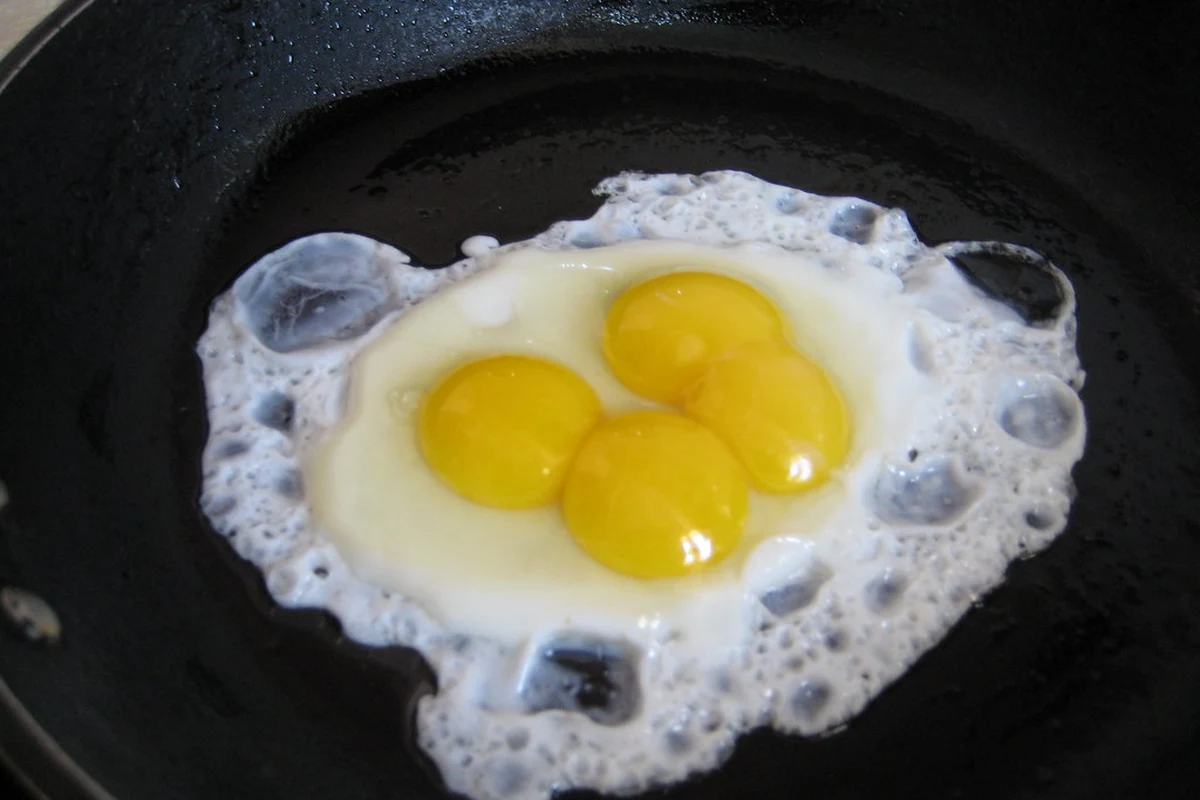
Photo: Quadruplets in a frying pan by h0lydevil, CC BY 2.0 via Flickr.
How much does Swiss Diamond cookware cost?
Swiss Diamond is expensive for nonstick, and price is the main reason not to buy it. On the brand’s own site, XD fry pans run about $65–$200 depending on size as of November 2026, with the popular 11-inch pan at $131.96 without a lid. The HD 10.25-inch fry pan lists at $159.95, on sale for $111.97.
Check the price of the Swiss Diamond HD 10.25-Inch Fry Pan on Amazon
A full set costs much more: Consumer Reports lists the HD 10-piece set at $599.95 on Amazon. That is a lot for nonstick, so start with one fry pan and add pieces only if the coating wins you over.
The 12.5-inch fry pan with a glass lid is the family-size option. It weighs about 7.5 pounds with the lid — a two-hand lift when full — and the lid’s knob doubles as a steam vent. If the price puts you off, a hard-anodized pan costs far less — our hard-anodized safety guide explains if that coating is safe.
Check the price of the Swiss Diamond HD 12.5-Inch Fry Pan with Lid on Amazon
Think price per year, not per pan: a $30 pan replaced yearly costs $150 over five years, about the same as one Swiss Diamond pan that stays slick that long — and it cooks better the whole time. For cheaper options, see our best non-toxic cookware for gas stoves.
What should you not do with a Swiss Diamond pan?
- Do not cook on high heat. Use low to medium heat and stay out of the top 25% of your stove’s settings — high heat is never needed and overheating damages the coating.
- Do not use nonstick cooking spray. Spray oils burn onto the surface and leave a sticky layer — use a little poured oil or butter instead.
- Do not use metal utensils or sharp tools. Silicone, wood, and plastic are the only utensils the brand recommends — never chop, cut, or use an electric beater in the pan.
- Do not store food in the pan. Marinades, tomato sauce, and other acidic foods can break the coating down — cook with them, then move leftovers to glass containers.
- Do not put it under the broiler or in the microwave — the pan is oven-safe to 500°F, but the broiler’s direct heat can exceed that.
- Do not nest pans bare. Stacking scratches the coating — put a paper towel or felt pan protector between pans.
- Do not rely on the dishwasher. The pans are dishwasher-safe, but some detergents leave gray residue on the base, and hand-washing keeps the coating slick longer.
The full care rules are on Swiss Diamond’s own use and care page, and the brand’s FAQ covers oven use and the HD vs XD difference.
When should you replace a Swiss Diamond pan?
Replace the pan when food sticks in the center even with oil, when the coating shows scratches or chips, or when a carbonized layer of old oil will not come off with hot, soapy water. Those are wear signs, and the coating does not heal.
A loose handle is another reason to retire a pan, though it can be tightened with a #2 Phillips screwdriver. Our when to replace nonstick pans guide covers the warning signs.
With daily use and good care, owners commonly report several years from one pan. With high heat and dishwasher-only cleaning, expect far less.
FAQ
Is Swiss Diamond cookware PFOA-free?
Yes. The HD and XD lines use a PTFE-based nonstick coating made without PFOA. To avoid fluoropolymers entirely, choose the CHD or CXD ceramic lines, made without added PFAS or PTFE.
Is Swiss Diamond induction compatible?
The standard HD and XD pans are not induction-compatible — buy the Induction version, with a flat magnetic base. Tell them apart by the base: induction pans are flat underneath, while classic pans have a 1.5-inch recessed center.
Is Swiss Diamond worth the money?
It is worth it if you cook most days, use low to medium heat, and hand-wash the pan — the coating releases food better and lasts longer than cheap nonstick, and the thick base heats evenly. It is not worth it if you cook on high heat or use metal utensils; a $30 pan fits that kitchen better.
How long does Swiss Diamond cookware last?
With proper care, owners commonly report several years of good performance. The limited lifetime warranty covers manufacturing defects, but wear from use is not a defect.