
Quick answer: Ceramic vs stainless steel cookware comes down to what you cook most. Ceramic wins for eggs, fish, and low-fat cooking — food releases with little oil — but the coating wears out. Stainless steel wins for searing, browning, and oven cooking, and a good tri-ply pan can last decades.
This guide is for home cooks replacing a worn-out pan or buying a first good skillet. It compares heat, durability, cleaning, and safety, then gives a verdict by cooking style. We compared specs, prices, and verified owner reviews.
This post contains affiliate links. If you buy through them, we may earn a commission at no extra cost to you.
As an Amazon Associate I earn from qualifying purchases.
Photo: Frying pans Colori Cucina Ceramic Induction by Kuhn Rikon, CC BY-SA 3.0 via Wikimedia Commons.
Ceramic vs stainless steel cookware: what is each one made of?
“Ceramic” cookware is not solid ceramic. It is an aluminum pan with a thin silica-based ceramic coating baked onto the cooking surface. GreenPan’s Thermolon is a diamond-infused ceramic nonstick, made without intentionally added PFAS. The aluminum body is usually hard anodized — our hard-anodized safety guide explains that layer.
Stainless steel cookware is bare metal — no coating at all. A good stainless pan uses tri-ply construction: an aluminum core sandwiched between two layers of 18/10 stainless steel, which spreads heat evenly. That core exists because stainless steel alone conducts heat poorly, and the steel surface itself has nothing to wear off or chip.
Ceramic nonstick works from day one and slowly fades. Stainless cooks the same in year ten as in year one, once you learn the technique.
How do you choose between ceramic and stainless steel?
Work through these steps in order. Your answers point to one material more often than the other.
- List the three dishes you cook most. Eggs, fish, pancakes, or grilled cheese point to ceramic; seared steak, browned chicken, or pan sauces point to stainless.
- Check your cooktop. Both work on gas and electric; induction needs a magnetic base. The GreenPan Valencia Pro uses a Magneto induction base and the Tramontina tri-ply pan has a magnetic stainless exterior — see our induction cookware guide.
- Decide how often you want to replace a pan. Ceramic is a shorter-life purchase — the coating wears with use, heat, and stacking. Stainless is buy-once: Tramontina backs its tri-ply line with a lifetime warranty.
- Set your budget per year, not per pan. A ceramic set costs about $100 and may need replacing after a few years of daily use; a stainless fry pan costs about $35 and can last decades.
What are the important details?
Heat is where the two materials split. Both makers say low to medium heat: high heat can damage GreenPan’s coating, and makes food stick and discolors Tramontina’s steel. Oven limits differ: Valencia Pro 600°F, Tramontina tri-ply 500°F.
Nonstick is ceramic’s big win and its weak spot. A new ceramic pan releases an egg with a teaspoon of oil, but the release fades as the coating wears and oil carbonizes. GreenPan’s own care page says those spots come from overheating plus oil, and a melamine sponge can remove them. Stainless has no nonstick claim: preheat and oil it first. Tramontina’s use and care guide describes the water-bead test: heat the empty pan 2–3 minutes, and when flicked-in water beads and dances, add oil and food.
Cleaning is close to a draw. Both are dishwasher-safe, and both makers recommend hand-washing to protect the finish. For ceramic, use a soft sponge and warm, soapy water — never steel wool. For stainless, soak stubborn food, use a nonabrasive pad, and use Bar Keepers Friend for stains. See how to clean a burnt stainless steel pan for the rescue steps. Never plunge a hot pan into cold water — thermal shock can warp it.
Safety claims need care. Ceramic coatings like Thermolon are made without PFAS; see our safest cookware materials guide. Stainless has no coating to break down: bare 18/10 steel. Tramontina’s manual warns against leaving salty or acidic foods, such as tomato sauce, in a stainless pan — pitting can occur.
Price makes the trade-off concrete. A ceramic example is the GreenPan Valencia Pro 3-piece frypan set (8, 9.5, 11 inches), about $100 on sale (from $259.99) as of November 2026: hard-anodized aluminum, diamond-infused ceramic, PFAS-free, induction-ready, oven-safe to 600°F. When the coating goes, the whole pan goes.
Check the price of the GreenPan Valencia Pro Fry Pan Set on Amazon
A stainless example is the Tramontina Signature Tri-Ply Clad 12-inch fry pan (model 80116/007DS), about $35 as of November 2026 (list $49.95). Tri-ply clad with an aluminum core between two 18/10 stainless layers, NSF-certified, dishwasher-safe, oven-safe to 500°F. It weighs about 2.9 pounds empty, heavier than ceramic the same size. See our gas-stove non-toxic guide and HexClad vs All-Clad.
Check the price of the Tramontina Tri-Ply Clad 12-Inch Fry Pan on Amazon
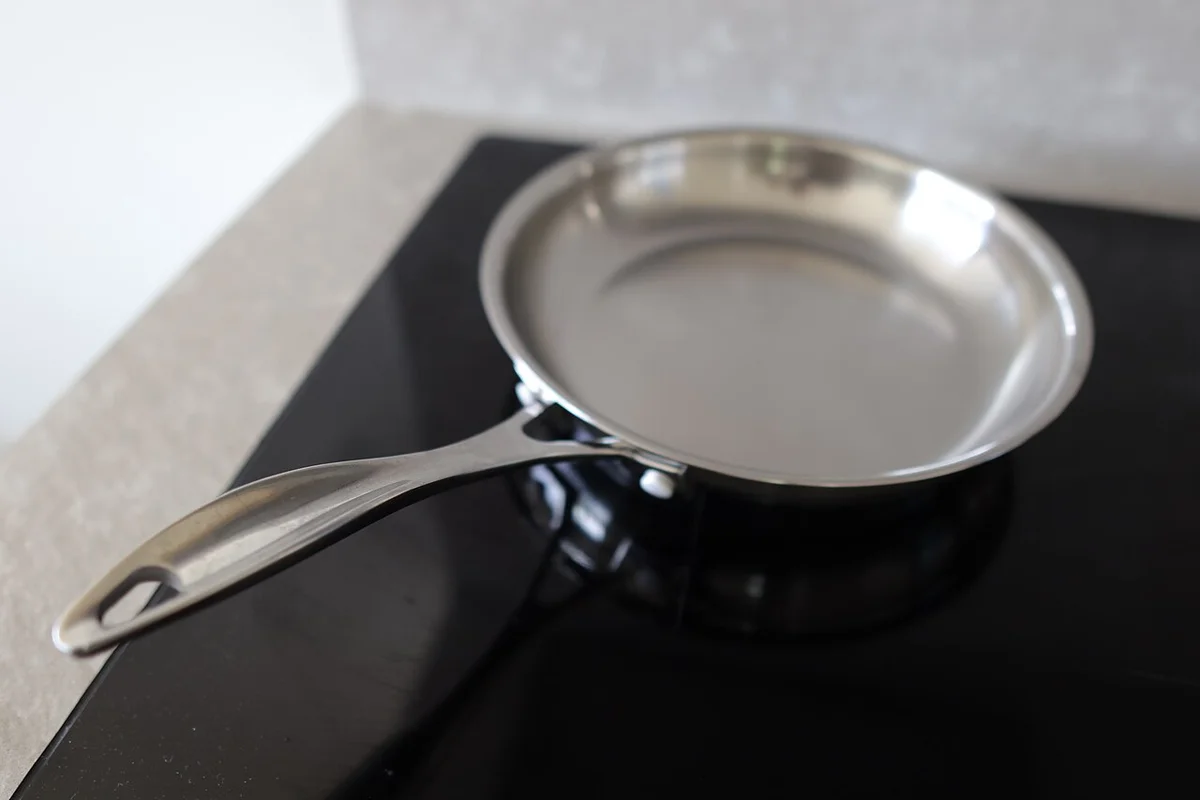
Photo: Stainless Steel Frying Pan by Jim Stonos, CC BY-SA 4.0 via Wikimedia Commons.
What should you not do with ceramic or stainless steel pans?
- Do not cook ceramic on high heat. High heat damages the coating and bakes oil into carbonized spots. Low to medium heat is enough.
- Do not use cooking spray on ceramic. Spray oils heat up fast, burn, and leave carbonization on the pan. Use poured oil or butter instead.
- Do not put food in a cold stainless pan. Cold steel grabs eggs and fish — preheat, add oil, wait 30 seconds, then add food.
- Do not plunge a hot pan into cold water. Thermal shock can warp pans. Let the pan cool before washing.
- Do not use steel wool or abrasive cleaners on either. They scratch ceramic coatings and dull stainless finishes. Use a soft sponge for ceramic and a nonabrasive pad for stainless.
- Do not stack ceramic pans bare. Nesting scratches the coating — use pan protectors or hang the pans.
When should you replace a ceramic pan?
Replace a ceramic pan when food sticks in the center even with oil, when the coating shows scratches or chips, or when discoloration will not come off with a melamine sponge. Those are wear signs — the coating does not heal. Daily use means replacing it sooner than weekly use does.
Stainless has no equivalent moment: no coating to wear out, so it is replaced only if the handle loosens or the base warps. That is the real price difference: ceramic is a repeat purchase, stainless is a one-time purchase.
Ceramic vs stainless steel at a glance
| Feature | Ceramic | Stainless steel |
|---|---|---|
| Cooking surface | Ceramic coating on aluminum | Bare 18/10 stainless, tri-ply |
| Heat behavior | Low to medium heat; high heat damages coating | Low to medium heat; tri-ply spreads heat evenly |
| Nonstick | Great when new; fades as coating wears | None — needs preheating and oil |
| Durability | Coating wears out; pan needs replacing | No coating to wear; lasts decades |
| Cleaning | Soft sponge, soapy water; melamine sponge for spots | Soak and scrub; Bar Keepers Friend for stains |
| Safety | PFAS-free coatings available | No coating to break down |
| Oven limit | Valencia Pro: 600°F | Tramontina tri-ply: 500°F |
| Price as of November 2026 | GreenPan 3-piece set: about $100 on sale | Tramontina 12-inch fry pan: about $35 |
Frequently asked questions
Is ceramic cookware safe?
Yes — ceramic coatings like GreenPan’s Thermolon are made without intentionally added PFAS: silica on aluminum, not a fluoropolymer. Use low to medium heat, soft utensils, no cooking spray, and replace the pan when the coating chips.
Does stainless steel cookware stick?
Yes, unless you preheat it first. Heat the empty pan over medium heat for 2–3 minutes, add oil, wait 30 seconds, then add food — the water-bead test in Tramontina’s manual shows when it is ready. Once food browns, it releases on its own.
Can ceramic pans go in the dishwasher?
Yes, most ceramic pans including the Valencia Pro are dishwasher-safe. Hand-washing is still better: both makers recommend it, and a soft sponge with warm, soapy water takes under a minute.
Which lasts longer, ceramic or stainless steel?
Stainless steel lasts far longer. A ceramic pan is a shorter-life purchase: its coating wears with heat, utensils, and stacking, so you replace the whole pan when the coating goes. Stainless has no coating to wear out — Tramontina offers a lifetime warranty on its tri-ply line.
Verdict by use case: buy ceramic for eggs, fish, and low-fat meals if you accept replacing the pan every few years. Buy stainless if you sear, brown, deglaze, and finish dishes in the oven — and want to buy the pan once. Many kitchens end up with both.