
Quick answer: Replace a nonstick pan when the coating is deeply scratched, flaking, or peeling, when food sticks even with oil at moderate heat, or when the base has warped so it rocks on the burner. There is no fixed expiration date; how long a pan lasts depends on its quality and how it is treated.
Nonstick skillets are the workhorses of quick weeknight cooking, which is exactly why they wear out. Unlike stainless steel or cast iron, the slick surface is a coating, and once that coating is damaged there is no way to restore it at home. Below are the clear signs that a pan has reached the end of its useful life, what the evidence says about scratched pans, and how to make the next one last longer.
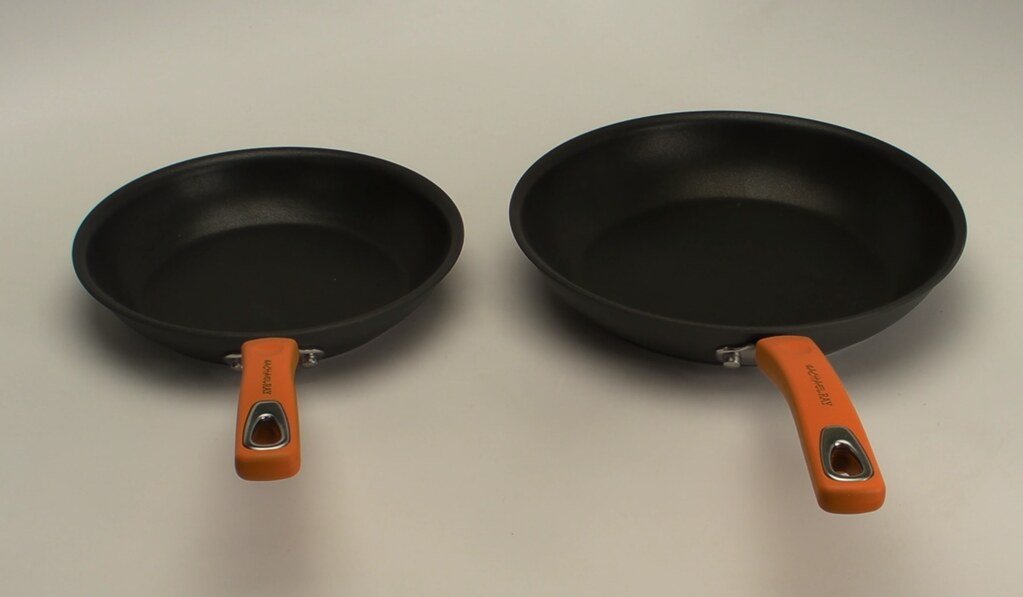
How long do nonstick pans last?
There is no official lifespan. Retailer Sur La Table puts it simply: no nonstick pan lasts forever, and the lifespan depends on the quality of the pan and how well it is cared for (see their nonstick care guide). A heavy pan used gently over medium heat and washed by hand will outlast a thin pan that gets blasted on high heat, scraped with metal tools, and run through the dishwasher.
Because frequency of use varies so much, judge the pan by its condition, not by its age. The signs below matter more than how many years it has been in the cabinet.
7 signs it is time to replace your nonstick pan
- Deep scratches that reach the metal. Light surface scuffs are common. Scratches you can feel with a fingernail, or that show bright metal underneath, mean the coating has been breached and will keep wearing from that spot.
- Flaking, chipping, or peeling coating. If you see dark flecks lifting off the surface or finding their way into food, the pan is done. This is the clearest replacement signal of all.
- Food sticks even when you use oil. Eggs that used to slide around now grab the pan at medium heat with a little butter. Once the release is gone, the main reason to own the pan is gone too.
- A warped base. Pans that rock on the cooktop, or that pool oil to one side, heat unevenly. America’s Test Kitchen notes that sudden temperature changes, such as cold water in a hot pan, can warp the metal, and a warped pan is especially hard to use on glass-top and induction cooktops.
- Blistered or bubbled coating after overheating. If a pan was left empty on high heat and the surface now looks blistered, discolored, or rough, the coating has likely been damaged.
- Stubborn residue you cannot remove without abrasives. Built-up, sticky film that only comes off with scouring pads usually means the surface is already compromised, and scrubbing will finish the job.
- A loose handle you cannot tighten. A wobbly handle is a burn and spill risk. If the screw or rivets cannot be secured, replace the pan.
Is it safe to keep using a scratched nonstick pan?
Most traditional nonstick coatings are made from PTFE, one of the PFAS family of chemicals. According to the U.S. Food and Drug Administration, the PTFE used on pots and pans is highly polymerized and bonded to the cookware at very high temperatures, and studies show negligible amounts of PFAS in this coating migrate to food.
The bigger, better-documented hazard is heat. America’s Test Kitchen warns that PTFE coatings can break down and release noxious fumes above about 500°F, which can happen quickly when a pan is preheated empty or placed under a broiler (their dos and don’ts of nonstick guide covers this).
Sources disagree on how much light scratching matters. Our practical take: a few faint scuffs are mostly a performance issue, but a pan that is flaking, peeling, or worn down to bare metal should be retired. If you are unsure, err on the side of replacing it; a basic nonstick skillet is an inexpensive tool.
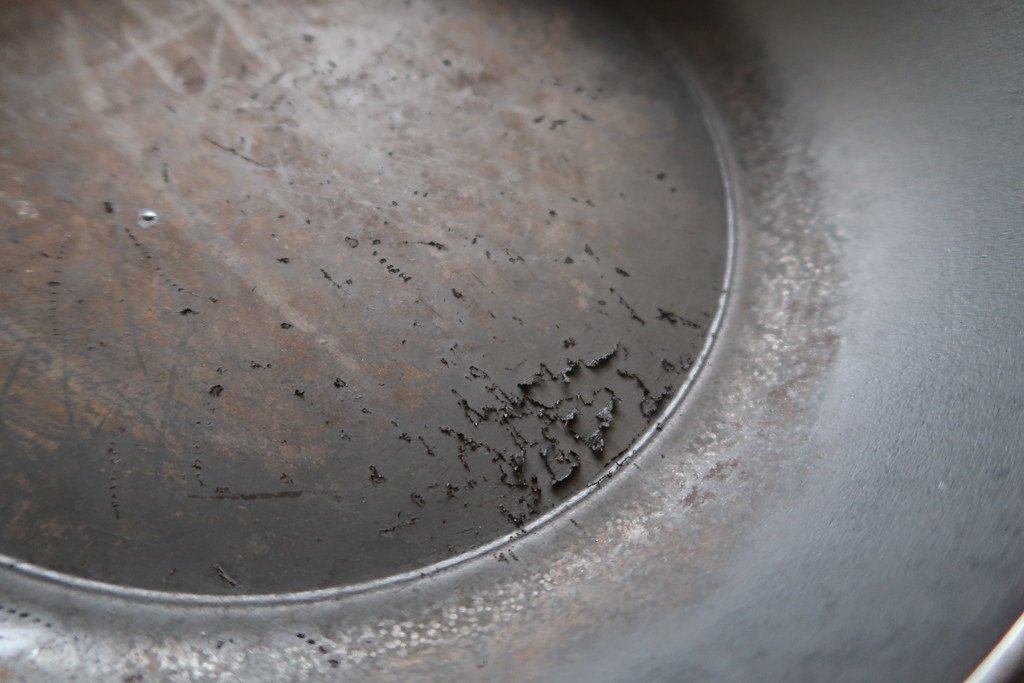
Can you fix or re-coat a nonstick pan?
Not in a home kitchen. Nonstick coatings are applied and cured in a factory at very high temperatures. Repair sprays sold online are not the same as the original coating, and scrubbing or sanding the surface only removes more of it. If the pan is still under warranty, check the manufacturer’s terms; some brands cover coating failure under normal use.
How to make your next nonstick pan last longer
- Cook over low to medium heat. Nonstick is designed for eggs, pancakes, fish, and delicate foods, not hard searing.
- Add fat before preheating. America’s Test Kitchen adds oil or butter before heating so the smoking fat warns you the pan is getting too hot.
- Use wood, silicone, or nylon utensils. Metal spatulas and whisks are the fastest way to scratch the coating.
- Let it cool before washing. Cold water on a hot pan can warp it.
- Hand-wash with a soft sponge. Skip oven cleaners and harsh chemicals, which Sur La Table says should never be used on nonstick.
- Store it carefully. Hang it, or place a pan protector or a folded towel between stacked pans.
What not to do
- Do not preheat a nonstick pan empty on high heat.
- Do not put it under the broiler.
- Do not cut food in the pan with a knife.
- Do not use steel wool or abrasive powders on the coating.
- Do not keep cooking with a pan that sheds flakes into food.
What to buy instead (or alongside)
Many cooks keep one inexpensive nonstick skillet for eggs and use more durable pans for everything else. If you are reconsidering materials, start with our guide to the safest cookware materials, and read whether hard-anodized cookware is safe if you like the feel of nonstick with a tougher body.
For a pan that can last decades, consider carbon steel; our walkthrough on seasoning a carbon steel pan for the first time shows how to build a slick surface yourself. Gas-stove owners can also browse our picks for non-toxic cookware for gas stoves, and if you are weighing a hybrid pan, see HexClad vs All-Clad stainless steel.
How to dispose of an old nonstick pan
Many curbside recycling programs do not accept cookware, so check your local rules first. Some scrap-metal recyclers take aluminum or steel pans; remove plastic handles if they ask you to. If the pan is still usable but no longer good for eggs, some people keep it for non-food jobs, but do not donate a pan with a flaking coating.
FAQ
How often should you replace nonstick pans?
Replace them based on condition rather than a calendar. Once the coating is flaking, deeply scratched, or no longer releases food with a little fat at medium heat, it is time.
Is a slightly scratched nonstick pan dangerous?
The FDA says negligible PFAS migrate from intact PTFE cookware coatings, and sources differ on light scratches. Pans that are flaking or worn to bare metal should be replaced.
Does putting a nonstick pan in the dishwasher ruin it?
Even when a pan is labeled dishwasher safe, harsh detergent and jostling can wear the coating faster. Hand-washing with a soft sponge is the gentler choice.
Why does food suddenly stick to my nonstick pan?
Usually the coating has worn down, or a thin layer of polymerized oil residue has built up. Try a gentle wash with warm soapy water and a soft sponge; if food still sticks at moderate heat with oil, replace the pan.
Pingback: Safest Cookware Materials: Stainless Steel vs Cast Iron vs Ceramic vs Nonstick (2026) | Taking The Kitchen