
Quick answer: Yes, enamel cookware is safe for most home cooks when the coating is intact and the piece comes from a reputable maker. Enamel is glass fused to cast iron or steel, so it does not react with food or leach metal the way bare iron can. The real risks are chipped enamel, extreme heat, and old or unmarked pieces that may contain lead in the glaze.
We compared Le Creuset’s guidance with the FDA rules on lead in ceramic glazes; we did not test cookware in our own kitchen for this article.
Photo: Le Creuset Blue Dutch Oven by Didriks, CC BY 2.0, via Flickr.
Is enamel cookware safe?
Yes, for everyday cooking. Enamel is powdered glass fused onto cast iron or steel at very high heat, forming a hard, smooth shell over the metal. That shell is non-reactive and non-porous, according to Le Creuset: it will not absorb odors, and it will not add a metallic taste to acidic foods like tomatoes, wine, or vinegar. It needs no seasoning, will not rust while intact, and works on every stovetop, including induction.
The safety question mostly comes down to lead. Some ceramic glazes leach significant amounts of lead into food, so the FDA caps how much lead ceramic foodware may release: 3.0 micrograms per milliliter for flatware, 2.0 for small hollowware, 1.0 for large hollowware, and 0.5 for cups, mugs, and pitchers. Modern enamel cookware from established makers is produced to meet those limits, so a new pot from a known brand is not a lead risk in normal use. For more low-worry options, see our guide to the safest cookware materials.
Be cautious with old, handmade, or imported pieces with no maker mark, and with bright red, orange, or yellow decoration, which often used lead compounds for vivid color. Pieces sold as decoration, or marked “Not for Food Use,” belong on the shelf. If you cannot verify who made a piece, do not cook with it.
How do you use enamel cookware safely?
- Wash before first use. Wash the pot in hot, soapy water, rinse, and dry it fully. It needs no seasoning.
- Match the burner to the base. Use a burner about the same size as the pot’s base, so heat does not spill up the sides and scorch the enamel.
- Preheat on medium for about 5 minutes. Let the pan heat gradually, then add food. Le Creuset warns against preheating an empty pot for longer than 5 minutes, because the enamel can crack.
- Add oil, then cook on low to medium heat. Cover the base with a little oil or butter first, since enamel is not nonstick. Low or medium heat handles most recipes; save high heat for boiling water or reducing sauces.
- Use gentle tools. Wood, silicone, or heat-resistant plastic tools are safest. Metal tools are fine with care, but do not scrape them across the enamel.
- Cool, wash, and dry. Let the pot cool to room temperature, then wash it with warm water, mild soap, and a soft sponge. Dry it fully. See how to clean enameled cast iron for the full walkthrough.
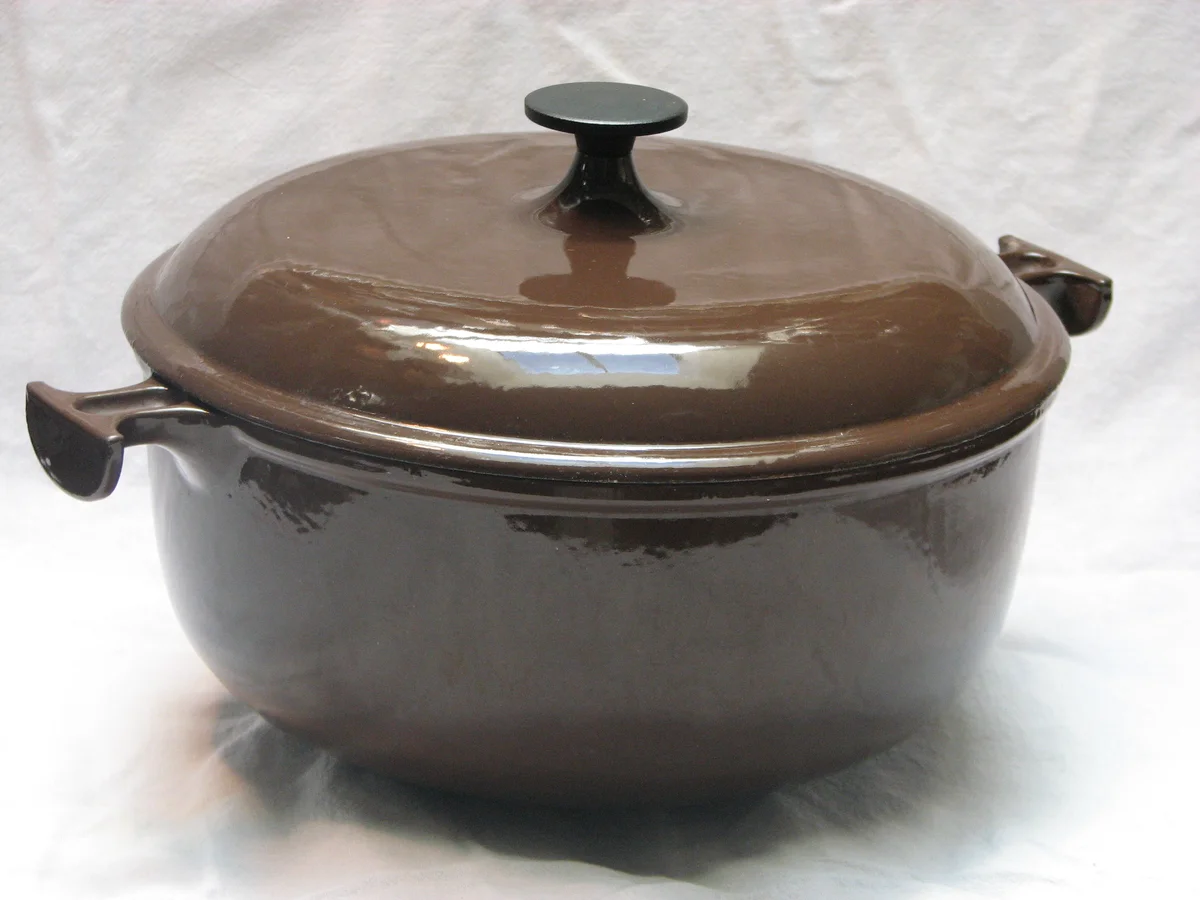
Photo: Le Creuset french/dutch oven from the La Mama line, designed by Enzo Mari by FiveRings, CC BY-SA 3.0, via Wikimedia Commons.
What should you watch for with chipping, heat, and lead?
Three things decide whether enamel cookware stays safe: coating, heat, and glaze.
Chipping. A chip breaks the glass seal and exposes the iron underneath. Exposed iron rusts, and a chipped edge can flake further into food. A small chip outside is mostly cosmetic, but one on the cooking surface is a real problem.
Heat. Enamel handles normal cooking heat well, but sudden temperature changes can crack it. This is called thermal shock. Never put a hot pot under cold water, and never move a pot straight from the freezer to a hot burner. Le Creuset rates its enameled cast iron oven-safe to 500°F, and the black phenolic knobs on its Classic range to 390°F.
Lead and cadmium. These metals can hide in the glaze of old or poorly made pieces, and acidic foods pull them out faster than plain water does. The FDA’s guide on lead in pottery notes that some ceramic foodwares leach significant lead and that the agency detains imports exceeding its limits, so buying from a maker that follows U.S. rules is the simplest protection. For other finishes, read is hard-anodized cookware safe.
What should you never do with enamel cookware?
These mistakes cause most reported damage.
- Never heat an empty pot on high, or let it boil dry. Both can permanently damage the enamel and the pot.
- Never plunge a hot pot into cold water. Let it cool first, or the enamel can crack from thermal shock.
- Never use metal scouring pads or abrasive cleaners. They scratch the glass surface, and scratches collect stains and weaken the coating.
- Never cut food inside the pot. A knife edge can chip the enamel on the cooking surface.
- Never move a frozen pot straight onto a burner. Let it reach room temperature first. A cold pot on direct heat can craze, leaving fine cracks in the enamel.
- Never use a burner far larger than the base. On a gas stove, flames licking up the sides scorch the enamel and overheat the handles; see our picks for the best non-toxic cookware for a gas stove.
When should you replace enamel cookware?
Replace the piece when the cooking surface can no longer shield food from the metal underneath. A pot with only a small exterior chip and a sound cooking surface can keep cooking.
- Chips or cracks on the cooking surface. Once the inside is chipped, the exposed iron rusts and the damaged edge keeps flaking. Retire the pot from cooking duty.
- Crazing across the cooking surface. A web of fine cracks means the glass seal has failed, and the surface becomes hard to clean.
- Rust you cannot remove. A little rust on an exterior chip can be scrubbed off, but rust spreading across the cooking surface means the enamel has failed.
- Unknown glaze on an old piece. If a thrift-store or inherited pot has no maker mark, heavy wear, or bright decoration you cannot verify, use it for display, not dinner.
For how other finishes age out, see when to replace nonstick pans.
How does enamel compare with bare cast iron and stainless steel?
| Cookware | Seasoning needed | Reacts with acidic food | Care level | Main risk |
|---|---|---|---|---|
| Enamel cast iron | No, the glass coating seals the iron | No, the enamel is non-reactive | Low: wash with soap and water, dry fully | Chipped enamel exposes iron that rusts |
| Bare cast iron | Yes, regular seasoning keeps it nonstick | Yes, tomatoes and wine can strip seasoning and taste metallic | High: season, dry at once, oil after washing | Rust if left damp or unseasoned |
| Stainless steel | No | No, it is non-reactive | Low: dishwasher-safe, tolerates scrubbing | Food sticks more; thin pans scorch easily |
Enamel wins for cooks who want cast iron heat without seasoning. Bare iron wins for high-heat searing, and stainless wins for everyday speed. For the full head-to-head on the two cast iron types, read enameled cast iron vs raw cast iron.
FAQ
Can you cook acidic foods like tomato sauce in enamel cookware?
Yes. The enamel coating is non-reactive, so tomato sauce, wine, vinegar, and citrus will not pick up a metallic taste or damage the surface. Le Creuset states this in its cooking guide.
Is chipped enamel cookware safe to use?
It depends on where the chip is. A small chip on the outside is cosmetic, and the pot is still fine to cook with. A chip on the cooking surface is different: the exposed iron can rust and flake into food. If the cooking surface is chipped, stop using the pot for food.
Does enamel cookware contain lead?
Modern enamel cookware from reputable makers meets the FDA’s limits on lead release from ceramic glazes, so a new piece from a known brand is not a lead concern. The risk sits with old, handmade, or imported pieces with no maker mark, especially brightly decorated ones.
Can enamel cookware go in the dishwasher?
Yes. Le Creuset says its enameled cast iron is dishwasher-safe, but it recommends hand washing to preserve the finish. Frequent dishwashing may dull the enamel, though this does not affect cooking performance.
Sources: Le Creuset — How to Cook with Enameled Cast Iron; Le Creuset — How to Care for and Clean Enameled Cast Iron; FDA — CPG Sec. 545.450 Pottery (Ceramics); Import and Domestic — Lead Contamination.