
Quick answer: let the pot cool, soak it in warm soapy water, and clean it with a nylon brush or soft sponge. For stuck-on food or stains, simmer water with a couple of spoonfuls of baking soda for 8–10 minutes, then scrub gently. Skip steel wool, metal scrapers and harsh abrasives — they scratch the glass-like enamel.
Enameled cast iron (think Le Creuset, Staub or a budget Dutch oven) is cast iron coated in a layer of porcelain enamel. That coating is why it never needs seasoning and can handle tomato sauce and wine — but it also means you clean it differently from bare cast iron. Here is the routine that keeps the enamel smooth and bright, plus fixes for the three problems people actually run into: burnt-on food, brown stains and a dull, rough surface.
This guide is based on manufacturer care instructions — mainly Le Creuset’s own cleaning advice — and widely used home methods. Always check the care booklet that came with your pot first; if it conflicts with anything here, follow the manufacturer.
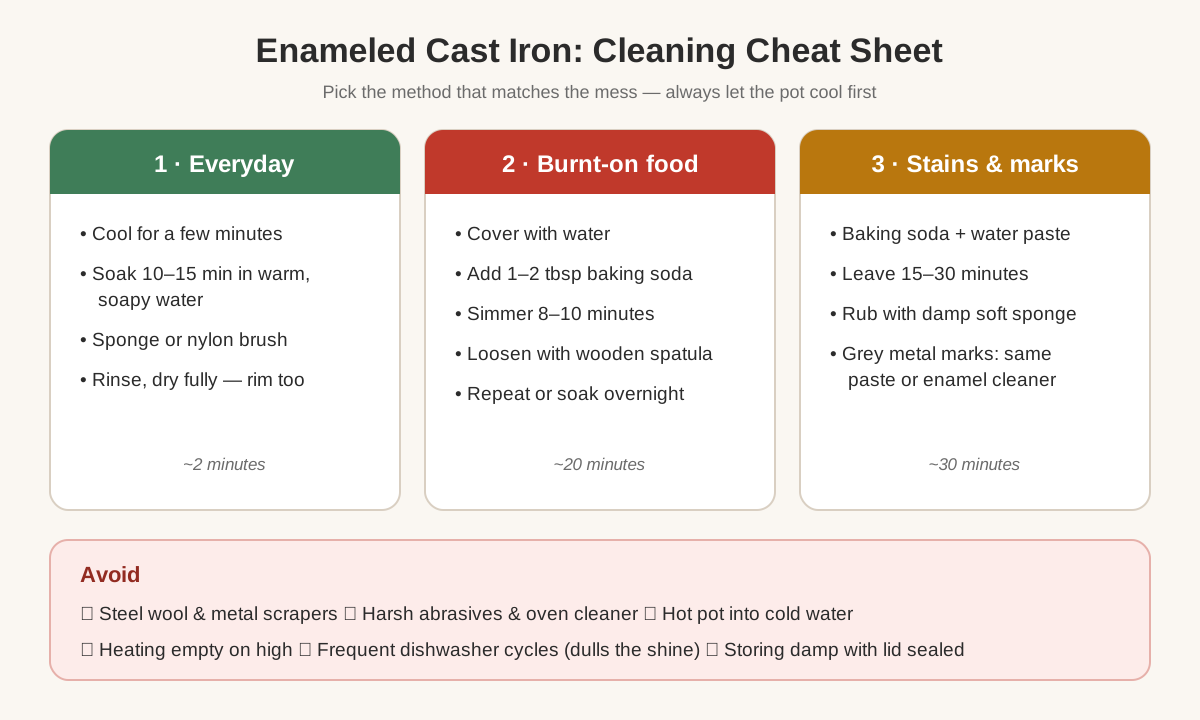
Everyday cleaning (after every use)
- Let it cool for a few minutes. Never plunge a hot pot into cold water. The sudden temperature change (thermal shock) can crack or craze the enamel.
- Soak in warm, soapy water. Ten to fifteen minutes loosens most residue. Regular dish soap is fine — unlike bare cast iron, there is no seasoning to strip.
- Wipe with a soft tool. Use a sponge, a nylon brush or a non-scratch pad. A wooden or silicone spatula will lift stubborn bits without scratching.
- Rinse and dry completely, including the rim and the underside of the lid, before you put it away.
Most enameled Dutch ovens are labelled dishwasher-safe, but frequent dishwasher cycles can gradually dull the glossy finish. Hand washing takes two minutes and keeps the enamel looking new.
How to remove burnt-on food
Burnt onions, scorched rice or a crust from braising — this is the method manufacturers recommend before you reach for anything stronger:
- Scrape out any loose food with a wooden spoon.
- Add enough water to cover the burnt area and stir in 1–2 tablespoons of baking soda.
- Bring it to a gentle simmer for 8–10 minutes.
- Let it cool slightly, then work the residue loose with a wooden spatula or nylon brush.
- Still stuck? Repeat once, or leave the baking-soda water in the pot overnight and try again in the morning.
Because the enamel is smooth glass, burnt food usually sits on the surface rather than bonding into it, so patience works better than force. If you have a stainless steel pan in the same state, the approach is different — see our guide to cleaning a burnt stainless steel pan.
How to remove stains and discoloration
Light-colored interiors (the sand or cream enamel in many Dutch ovens) slowly pick up brown or grey stains from oil and high-heat searing. Stains don’t affect cooking, but you can lighten them:
- Baking soda paste. Mix baking soda with a little water into a thick paste, spread it over the stain, leave it for 15–30 minutes, then rub with a damp soft sponge and rinse.
- A cleaner made for enamel. Several cookware brands sell enamel-safe cleaners for heat marks and discoloration. Some owners use a mild powdered cleanser such as Bar Keepers Friend as a paste — test it on a small area first and check that your manufacturer allows it.
- Grey metal marks. Thin grey lines usually come from metal spoons or whisks rubbing off on the enamel. They are deposits, not scratches, and normally lift with a baking-soda paste or an enamel cleaner. Switching to wooden or silicone utensils prevents them.
Avoid bleach unless your manufacturer’s current instructions specifically recommend it — strong chemicals can dull the finish over time.
Cleaning the outside and the rim
Clean the exterior the same gentle way: warm soapy water and a soft pad, with a baking soda paste for greasy marks from the stovetop. Many enameled pots have a thin strip of exposed cast iron along the rim and the lid edge. That bare metal can develop surface rust if it stays wet, so dry it carefully. If you spot a little rust there, wipe it off and dry the pot well; for heavier rust on bare iron, see how to get rust off cast iron.
What not to do
- Don’t use steel wool, metal scouring pads or metal scrapers.
- Don’t use harsh abrasive powders or oven cleaner.
- Don’t put a hot pot under cold water or set it on a cold, wet surface.
- Don’t heat the pot empty on high heat. Manufacturers generally recommend low to medium heat — cast iron holds heat so well that high heat is rarely needed, and overheating is the most common cause of stubborn stains.
- Don’t store it with the lid sealed tight while damp; leave the lid slightly ajar or put a paper towel under it.
What if the enamel is chipped or cracked?
Small chips on the outside are mostly cosmetic. A chip or crack on the cooking surface is different: food can catch on the exposed iron and the damage can spread. Many manufacturers advise against cooking in a pot with chipped interior enamel and offer warranty support, so contact the brand before using it again. Our comparison of enameled vs raw cast iron explains why the enamel is worth protecting in the first place.
Keeping it in good shape
- Preheat gradually over low to medium heat, with oil or liquid in the pot.
- Use wooden, silicone or nylon utensils.
- Lift the pot instead of sliding it on glass or induction cooktops.
- Give it a baking-soda simmer every so often to stop light stains building up.
Looking for a new pot? See our picks for the best Dutch ovens under $100, and our guide to the safest cookware materials.
FAQ
Can you use soap on enameled cast iron?
Yes. Enameled cast iron has no seasoning layer, so ordinary dish soap is safe and recommended.
Do you need to season enameled cast iron?
No. The enamel is a finished cooking surface. Only exposed bare-iron areas, such as some rims, benefit from being kept dry.
Can enameled cast iron go in the dishwasher?
Most are labelled dishwasher-safe, but repeated cycles can dull the shine. Occasional use is fine; hand washing is better for the long run.
Why is my enameled Dutch oven turning brown inside?
Brown staining comes from oils and food residue that polymerise on the surface, especially at high heat. It is normal and doesn’t affect cooking. A baking-soda simmer or paste usually lightens it.
Pingback: Enameled vs Raw Cast Iron (2026): Which to Buy?
Pingback: Best Dutch Oven Under $100 (2026): 5 Picks Compared