
Quick answer: Store cast iron only when it is completely dry and lightly oiled, in a cool, dry spot with some airflow – a stovetop, oven, open shelf, cabinet or wall rack all work. If you stack pans, put a paper towel or cloth between them, and never seal a lid tightly on a damp pot; prop it open or use a pot protector.
Rust on cast iron almost always comes from moisture that was trapped during storage, not from cooking. The good news is that storage is easy to get right once you know the few rules that matter. Below are day-to-day methods, small-kitchen ideas, long-term storage, and what to avoid.
What should you do before putting cast iron away?
Lodge sums up routine care in one line on its cast iron vs. carbon steel care page: wash in warm water, dry, and oil. Storage starts with those three steps:
- Clean out food. Leftover food and acidic sauces hold moisture against the surface. If something is stuck on, see how to clean burnt-on cast iron.
- Dry it completely. Towel-dry, then set the pan on a low burner for a minute or two until every drop is gone, including the handle, rim and underside.
- Add a very thin coat of oil. Wipe a few drops of neutral oil over the cooking surface while the pan is warm, then wipe again until it looks almost dry. A sticky film means you used too much.
- Let it cool before stacking or covering it.
Where is the best place to store cast iron?
Anywhere cool, dry and convenient. Lodge’s care guidance for its enameled pieces recommends a cool, dry place “like your stovetop or cabinet,” and the same logic applies to bare cast iron. Good options include:
- On the stovetop. Your most-used skillet can simply live on a back burner. It stays dry and gets used often, which keeps the seasoning healthy.
- In the oven. A popular space saver – just remember to take the pans out before preheating.
- Open shelves or a pan rack. Air circulates freely and you can see everything. Make sure the shelf is rated for the weight.
- Wall hooks or a grid. In a story on how Lodge employees store their cookware, staff describe commercial grid walls, pipe-and-S-hook racks, barn-wood shelves and countertop organizers.
- A lower cabinet or drawer. Fine as long as it is not under the sink or next to the dishwasher vent.
How do you stack cast iron pans without damaging them?
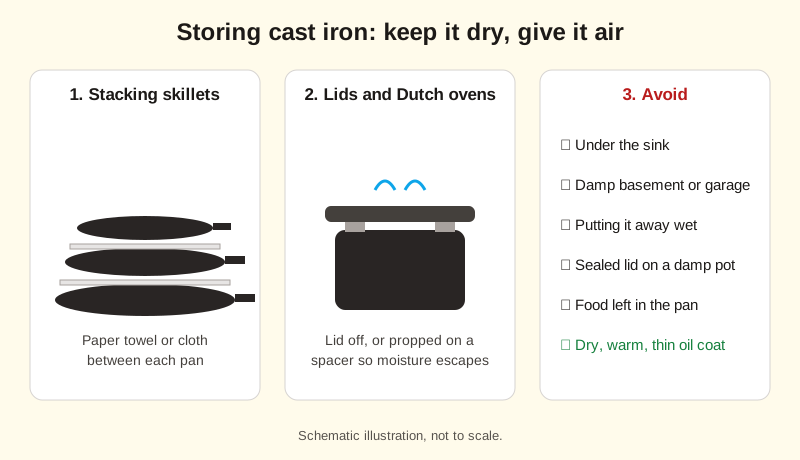
Stacking is safe if you protect the seasoning and give moisture somewhere to go:
- Put the largest, heaviest pan on the bottom.
- Lay a folded paper towel, a cotton cloth or a felt pan protector in each pan before setting the next one on top.
- Keep stacks short – three or four pieces – so you can lift them out without dragging iron across iron.
- Store enameled cast iron separately or with protectors on every layer, since enamel can chip.
Should you store cast iron with the lid on?
Not sealed. A tight lid on a pot that holds even a little moisture creates a humid pocket that encourages rust. Lodge’s enameled cast iron care page advises using pot protectors to prevent moisture buildup and chipping when you store a pot with its lid. For bare cast iron Dutch ovens, do the same: rest the lid upside down or prop it on a folded paper towel so air can move.
How do you store cast iron in a small kitchen?
- Hang one or two skillets on a wall rail near the stove.
- Use a vertical pan organizer in a cabinet so pans stand on edge instead of stacking.
- Keep the Dutch oven on the stovetop or in the oven if cabinet space is tight.
- Store rarely used pieces (griddles, specialty pans) on a high shelf, dried and oiled.
How do you store cast iron long term?
For a pan you won’t use for months – a camping set, a spare skillet or a family heirloom – take a little more care:
- Clean, dry on heat and apply a thin coat of oil as above.
- Wrap each piece loosely in paper (newspaper, kraft paper or paper towels) to absorb humidity.
- Store indoors in a dry closet or cabinet rather than an unheated garage, shed or damp basement.
- Avoid sealing pans in airtight plastic bags, which can trap moisture. For camp gear, Lodge suggests drying the cookware first and keeping it in a storage container with your other kitchen supplies.
- Check on it every few months. If you find light rust, follow how to get rust off a cast iron skillet and re-season.
What not to do
- Don’t store cast iron under the sink or next to a dishwasher, where leaks and steam are common.
- Don’t put a pan away warm and wet, or let it air-dry in a dish rack.
- Don’t leave food or sauce in the pan overnight.
- Don’t over-oil before storage; a thick layer can turn sticky or rancid.
- Don’t stack enameled cast iron directly on bare iron without protection.
Frequently asked questions
Can you leave cast iron on the stove all the time?
Yes, as long as the area stays dry. A stovetop is one of the best places for a daily-use skillet. Just keep it away from boiling pots that could drip or splash on it.
Is it okay to store cast iron in the oven?
Yes. The oven is dry and enclosed. The main risk is forgetting the pans are inside when you preheat, so keep a habit of checking or use an oven mitt reminder on the handle.
Why does my cast iron get sticky in storage?
Usually too much oil. Excess oil that does not polymerize stays tacky and can go rancid. Wipe the surface until it looks nearly dry before storing, and if it is already sticky, heat the pan and wipe again, or re-season it.
Do enameled cast iron pans need the same storage care?
Mostly. They don’t need oiling, but they must be completely dry, and the enamel needs protection from chips. See how to clean enameled cast iron and our comparison of enameled vs. raw cast iron.
Pingback: How to Cure a Cast Iron Skillet (2026): Season It the Right Way