
Quick answer: Yes, you can use a cast iron skillet on an electric stove with exposed coils. Lodge says its cast iron works on electric cooktops, and GE lists cast iron as recommended cookware for coil cooktops. Match the skillet to the burner, heat it slowly, and lift it straight up instead of dragging it.
If you cook on an older coil-top range, you have probably wondered whether a heavy cast iron skillet belongs on those springy rings. This guide is for home cooks with a coil electric stove who want to sear and fry in cast iron without bending a coil. We compared manufacturer guidance and verified owner reviews to lay out what works.
Photo: Hotpoint Electric Range Model RB5280A1AD, IMG03 by Steven Pavlov, CC BY-SA 4.0 via Wikimedia Commons.
Why does a cast iron skillet work on a coil-top electric stove?
A coil-top stove and a cast iron skillet suit each other better than most people expect. The coil is a bare metal heating element, so there is no glass to scratch. The pan sits right on the metal rings, and the iron takes the heat and holds it.
The manufacturers agree. Lodge’s use and care instructions say its cast iron is right at home on electric cooktops, and GE’s owner’s manual for its coil-top ranges lists cast iron under recommended cookware for coil cooktops.
Cast iron also matches how a coil stove delivers heat. Coils cycle on and off to hold a setting, so the temperature at the burner rises and falls in waves. A thin pan follows every wave, so food scorches, then stalls. Cast iron is slow to heat and slow to cool, so it smooths those waves into steady heat.
How do you cook with cast iron on a coil stove?
Follow these steps every time:
- Pick the burner that fits the pan. Use the large burner for a 12-inch skillet and the small burner for a 10-inch skillet.
- Set the skillet down gently, centered on the coil. Lower it straight down with two hands.
- Check that it sits flat. Press the rim lightly on each side. If the pan rocks, try another burner.
- Preheat on low to medium for about five minutes. Lodge notes that cast iron rarely needs more than a medium setting once it is properly preheated.
- Add oil just before the food goes in. A thin coat of oil stops sticking and shows the pan is ready when it shimmers.
- Lift the pan to move it, never drag it. Pick it straight up to move it to a cool burner. Dragging a heavy skillet can bend a coil.
- Take the pan off the burner when the food is done. Coils stay hot after you turn them off, so food left sitting on the coil keeps cooking.
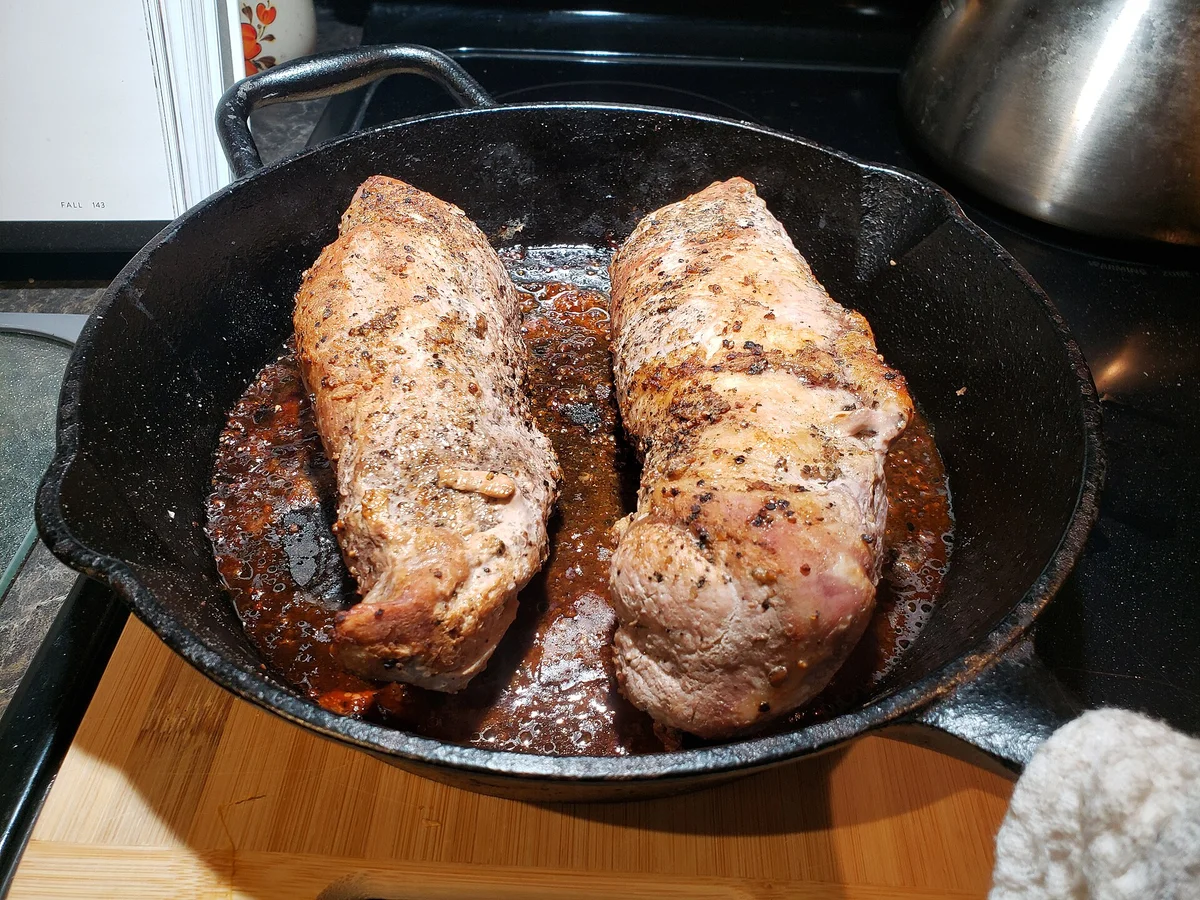
Photo: Seared and roasted Pork Tenderloin in Cast Iron Skillet by Taylorderek, CC BY 4.0 via Wikimedia Commons.
What should you check before you cook on a coil stove?
Burner size matters most. A skillet much wider than its coil heats from the middle out, so the center browns while the edges stay pale. Lodge lists its 12-inch skillet (L10SK3) at 7.69 pounds empty with a 9.12-inch flat bottom — put that pan on the large burner. The 10.25-inch Lodge (L8SK3) weighs 5.66 pounds and fits a small burner better.
| Skillet size | Weight empty | Best burner |
|---|---|---|
| 10.25-inch (Lodge L8SK3) | 5.66 pounds | Small or large coil |
| 12-inch (Lodge L10SK3) | 7.69 pounds | Large coil only |
Next, test the pan’s base. Set the empty skillet on a flat counter and press opposite edges. If it spins or rocks, the base is warped, and it will rock on the coil too. A warped pan cooks unevenly, so save it for the oven.
Then look at the coils. A coil should sit level in its drip pan, with all its turns in one flat spiral. If a coil is bent or sitting crooked in its socket, fix or replace it before you put a heavy skillet on it — a full pan can weigh 10 pounds or more.
Finally, respect the weight. Lifting a full cast iron skillet off a coil takes two hands and a dry oven mitt. Our guide to how to store cast iron covers keeping a heavy pan where you can reach it safely.
What should you not do on a coil stove?
These mistakes cause most of the damage people blame on the stove:
- Do not drop the skillet onto the coil. A heavy pan dropped even a few inches can bend a coil or knock it out of its socket.
- Do not slide or drag the pan. Sliding bends coils and scrapes the pan’s base. Lift it every time you move it.
- Do not blast a cold pan on high. Cast iron heated fast from cold can develop hot spots and warp over time. Lodge says its cookware reaches 400°F in 4 minutes on medium heat, so high is rarely needed.
- Do not leave an empty pan on high heat. An empty skillet keeps climbing past cooking temperature, which can damage the seasoning.
- Do not put a wet pan on a hot coil. Water trapped under the pan steams and spatters, and it can leave rust spots. Dry the pan fully first — if rust does appear, our guide to how to get rust off a cast iron skillet walks through the fix.
- Do not cook with a pan that rocks. A rocking pan is a warped pan. It will cook unevenly and can tip when you stir.
When should you use another pan instead?
A coil stove and a cast iron skillet are a good match, but not for every job. A warped or rocking skillet belongs in the oven, not on a coil. A skillet wider than your largest burner will cook unevenly. And if your coils are already bent or loose, get them fixed first — a heavy skillet will only make a bad coil worse.
Weight is the other honest limit. A 12-inch skillet at 7.69 pounds empty is heavier once it holds food. If lifting that much is hard for you, switch to a lighter pan. Carbon steel cooks much like cast iron at about half the weight; our cast iron vs carbon steel steak comparison shows how the two behave side by side.
Delicate, fast-changing heat is the third case. Cast iron is slow to cool down when you turn the burner off. For a sauce that needs the heat cut in seconds, a thin stainless or aluminum pan answers the dial faster.
What if your electric stove has a glass top?
The short answer is different: a glass top needs more care than coils. On glass, you must lift the skillet every time you move it, never slide it, and a dropped pan can crack the surface. Coils forgive the weight and the rough base of a cast iron skillet; glass does not. Read our full guide to using a cast iron skillet on a glass top stove first.
Frequently asked questions
Will a cast iron skillet damage the coils on my electric stove?
No. GE lists cast iron as recommended for coil cooktops. Damage comes from dropping the pan or dragging it, which bends coils — not from normal cooking.
Can I use a cast iron skillet on high heat on an electric stove?
You can, but you rarely need to. Lodge says cast iron rarely needs more than a medium setting once preheated — its cookware reaches 400°F in 4 minutes on medium heat.
Why does my cast iron skillet wobble on the coil burner?
A wobble means either the pan’s base or the coil is not flat. Test the pan on a counter: if it rocks there, the base is warped. If the pan is flat on the counter but rocks on the stove, the coil is bent or sitting crooked. Fix the coil or use a different burner. If the seasoning looks thin, our guide to how to season cast iron shows how to rebuild it.
Can I use an enameled cast iron skillet on a coil stove?
Yes. Enameled cast iron works the same way as bare cast iron on a coil stove, and the smooth enamel base is gentler on the coils. Treat it the same way: match the burner, heat slowly, and lift to move it. Do not drop it, since a hard knock can chip the enamel. After cooking, our guide to how to clean a cast iron skillet with burnt-on food covers stuck-on messes.
A coil-top electric stove is one of the friendliest stoves for cast iron. Match the pan to the burner, preheat slowly, and lift instead of drag — and your skillet will cook well on that stove for decades.